Ferrari Luce - Ahead of it's time, or just not what we want?
The all new, all electric Ferrari Luce was officially launched in May 2026, to, let's be honest, mixed reviews.
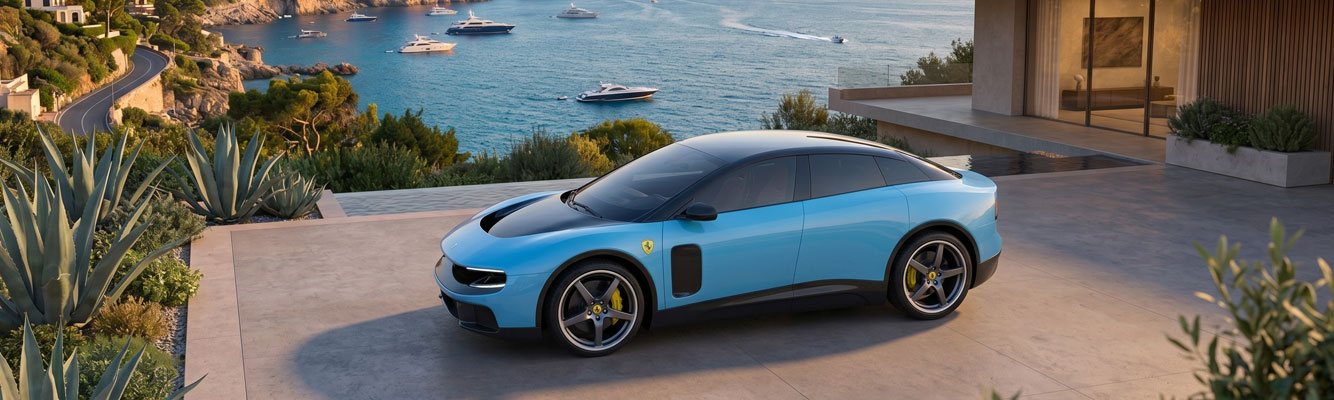
The Luce represents a significant milestone for the brand, so let's take a look at the car, its development and its reception to see how this car has managed to divide opinion.
The Ferrari Luce
Meaning ‘light’ in Italian, the Luce is a full EV supercar for the environmentally conscious Ferrari customer, costing about £475,000. It boasts four electric motors producing over 1,000bhp, a 122kWh battery, all-wheel drive, and a range of around 330 miles.
This is not Ferrari’s first foray into electrification, they first introduced hybrid technology in the LaFerrari as far back as 2013 and have produced highly successful models such as the SF90 Stradale and the 296 GTB combining aspirated engines with electric motors. However, the development of the Ferrari Luce represents one of the most significant transformations in their history. As Ferrari's first fully electric production car, the Luce signals the beginning of a new era for this famous Italian manufacturer.
LoveFrom Design
The Luce is a collaboration between the Ferrari in-house design department, Centro Stile Ferrari, and the renowned design firm LoveFrom. LoveForm was founded by Jonathan Ive, the British born designer credited with all the revolutionary Apple products, such the iMac and iPhone that transformed modern design. Working alongside Ive was industrial designer Marc Newson who brought his function first ideals to the project.
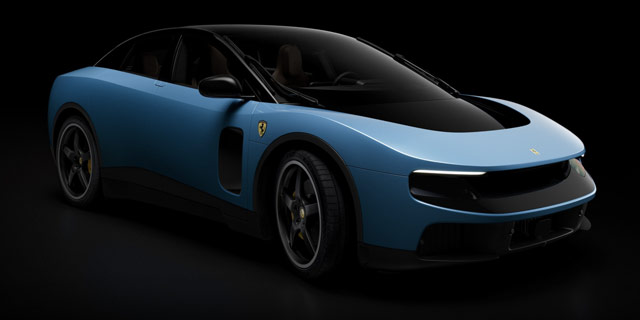
The Luce silhouette is already a departure from the normal Ferrari look, with a shorter front section owing to a lack of power unit allowing for a larger cabin space, and, stop press, four doors! Not only does it have four doors, without the need for a transmission space in the middle of the car, it even has five seats.
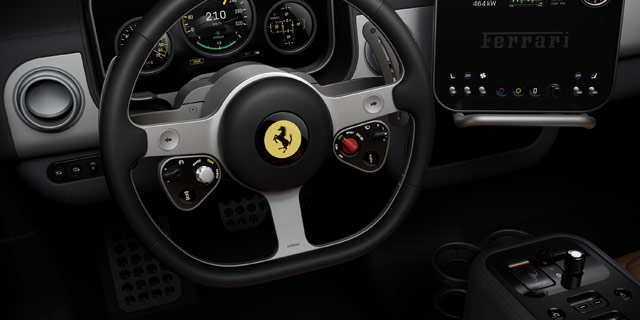
The interior is where Ive and Hewson have really gone to town and have made some considerable radical moves. Inspired by contemporary architecture and luxury furniture design, the driver’s space is designed to be simple but reflect real craftsmanship, and technology. Large digital displays are utilised in the dashboard and premium sustainable materials are used throughout.
Reception
Any new Ferrari model is immediately under the spotlight, but as Ferrari's first fully electric production car, the Luce might be feeling the spotlight is a little harsher than normal. Ferrari have hoped to remain loyal to their core values of producing a performance and driver experience first supercar whose design will make you stop and look. What the Luce has exposed is the different interpretations of what those core values are, and traditionalists are not happy.
Firstly, let's look at the power unit. Many simply do not want an electric Ferrari, so will constantly lament the demise of the V12. The Luce simply can’t compete if that is the underlying argument. If we look at the performance by the numbers, the Luce is a true supercar. 1000 php, a top speed in excess of over 180 mph and a 0-60 time of 2.6 seconds is more than enough to get the blood flowing. Equally as important, the Luce delivers instantaneous throttle response and dynamic agility that rival the petrol-powered Ferraris and they claim they have worked tirelessly to ensure the weight of the battery doesn’t compromise the ride and handling. New technologies also have other major advantages with the Luce having an advanced suspension system, rear-wheel steering, adaptive aerodynamics, and next-generation traction control which contribute to many dynamic capabilities. Ferrari has also developed bespoke software systems that allow drivers to tailor the vehicle's performance characteristics to suit different road and driving conditions. Many commentators have praised Ferrari’s commitment to performance, but without the V12 or V8 growl, others will never be satisfied.
This is therefore no ordinary electric runaround. Or is it? One of the main criticisms is the design. Even with the move to electric, many feel the Luce should look like a traditional Ferrari, but point out the similarities between the Luce and the new Nissan Leaf. Look and judge for yourself. It is easy to understand the rationale behind employing Jonathan Ive, but maybe the design needed to be more distinctly Ferrari in order to help customers more readily embrace the changes. Matteo Salvini, Italy’s transport minister “Aesthetically speaking, it speaks for itself,” he added: “I wonder what Enzo Ferrari would say.” Maybe the most notable criticism has come from Luca di Montezemolo who led Ferrari for 23 years until 2014, saying, “If I had to say what I really think, I would be hurting Ferrari. We’re risking the destruction of a legend, and I’m truly sorry about that. I hope they at least remove the prancing horse”.
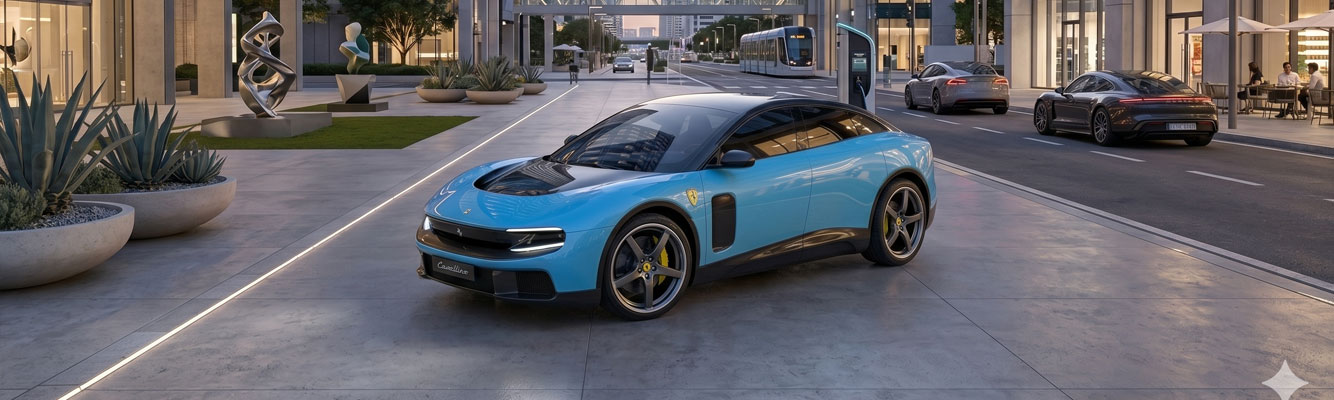
The interior is also polarising option. If the intention was to spark a debate about what a modern, technology focussed, Ferrari should be, then it has been a huge success. Some love it, some see it as a step too far and more akin to supercars now being developed in China and South Korea. What is it that makes Ferrari different, or is that so important in the world of touch screens and instant driver satisfaction? You can't help but think, with all the initial publicity shots with the Luce in a powder blue and not the Ferrari red, they know exactlly what they are doing and want to have the exposure.
The design language used by LoveForm is radical and maybe only time will tell how successful that will be. Even classics such as the F40 and F50 had differing views on their launch, only to find Ferrari were right all along. Maybe we should trust in what they do and embrace the Luce as what it is, the first in what will be a long line of fully electric Ferraris and trailblazing icon. We simply don’t know how successful the Luce will be within a different, younger, supercar buying demographic. Critics have challenged LoveFrom’s approach calling it more of a technology product than a supercar, but maybe that is exactly what some customers want. By offering something different, Ferrari could have stumbled a winning formula which could underpin the brand for the next 20 years, allowing them to make less profitable, traditional V12 supercars alongside a range of electric supercars and cater for all tastes and styles.
Even the most ardent of critics must accept, supercar design and specifications are going to change. Some might not like the Luce, but Ferrari must be given praise for a big swing and making a bold and necessary step. You might not like the design even, but you can be assured in 20 years time, you will recognise the Luce and know exactly what era it comes from.