McLaren McL 6GT- an all new manual supercar for analogue fans
Announced this week, an all new, manual supercar with a global release - The McL 6GT marks a fascinating return to the past for McLaren.
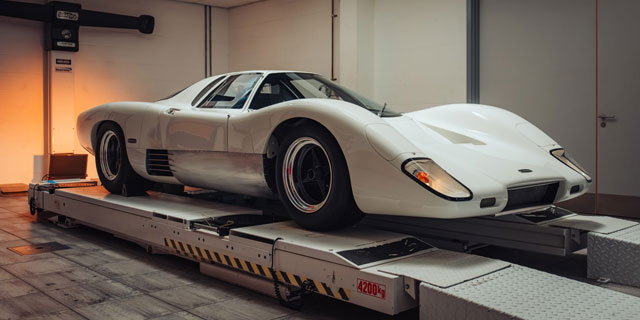
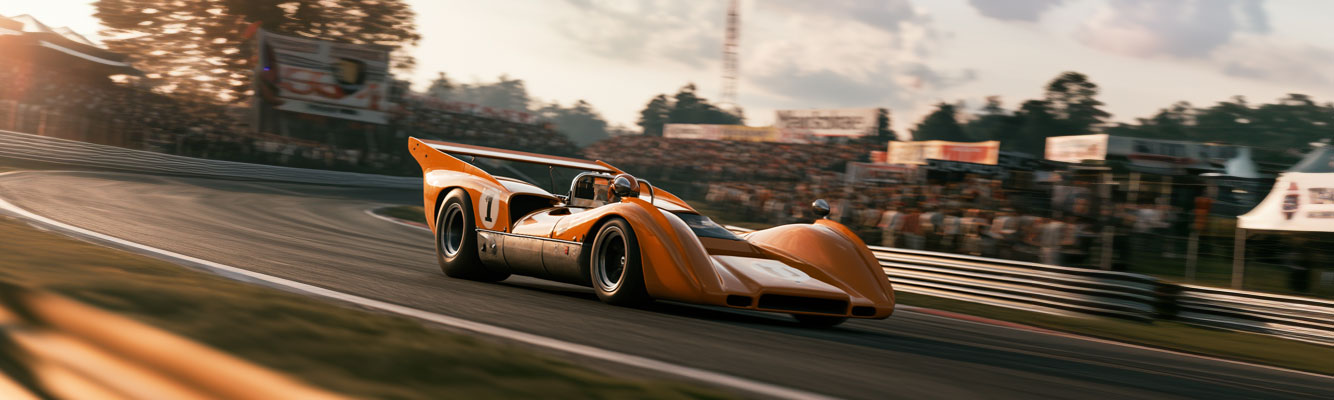
The concept is based on the unfinished M6GT road-car project from Bruce McLaren, the legendary founder of McLaren. In the late 1960s, McLaren were in the process of developing a new closed cockpit racing supercar which unfortunately never made it into production due to Bruce McLaren's untimely death in 1970.
The original M6GT project was conceived as a development of their open cockpit racing car the M6 Can-Am. McLaren had already developed a prototype version of the M6GT as a coupe which Bruce McLaren used personally as his everyday car. He saw great potential in the chassis and the car and wanted to produce a version which could compete in the Group 4 GT category against Ferrari, Porsche and Ford. However changes to FIA regulations meant McLaren would have needed to produce at least 50 complete cars, which the then small company couldn't realistically achieve. McLaren took the decision to abandon the racing project, but still saw merit in developing a road-going M6GT.
The project had got as far as to produce another 3 prototypes alongside Bruce McLaren’s coupe, which by all accounts were ready for full testing with the intention of producing 250 cars for general sale. Unfortunately Bruce was killed at Goodwood in June 1970, meaning the project effectively died with him.
The All New Analogue Superstar
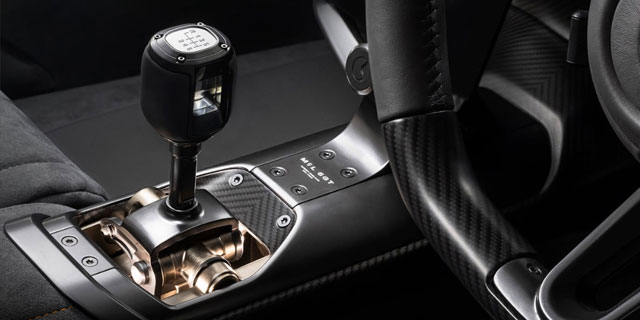
55 Years later, McLaren have chosen to complete the M6GT project and give us the McL 6GT, with a mid-mounted V8 and a very special, all new six-speed manual gearbox.
The McL 6GT, will also have a lightweight carbon-fibre monocoque and bodywork, hydraulic steering, physical controls and an exposed mechanical gear linkage.
First models are due to be ready for customer delivery in 2028, although McLaren have yet to announce how many will be up for grabs. The intention will be to have the McL 6GT as an exclusive alternative to the current range, but if customers love the return to a manual, then who knows if McLaren would widen its availability.
Why a Manual and not a Semi-Auto?
Why do we think there is still room for a manual option, given that semi-auto gearboxes give better reaction times and better performance?
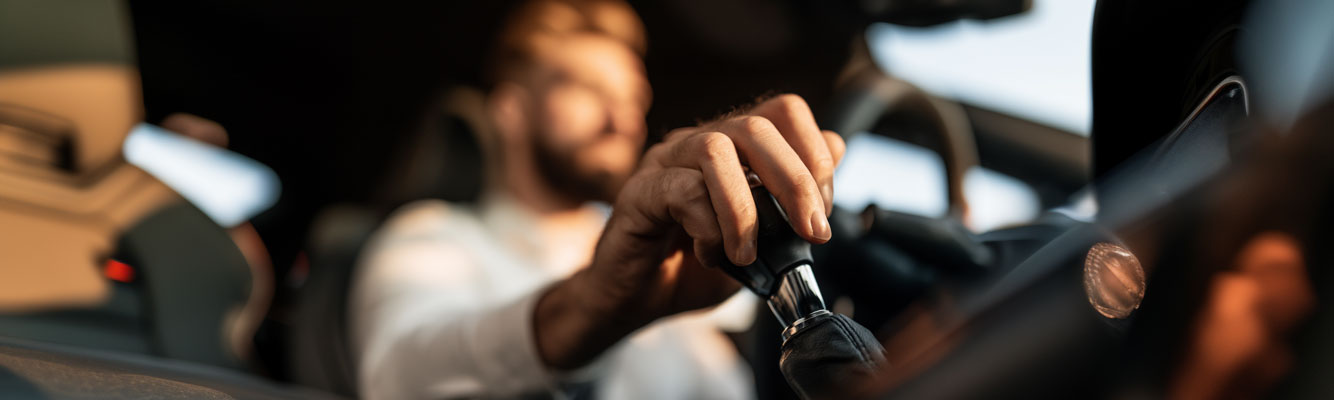
Firstly, with a manual gearbox you always feel more connected to the car. With a manual, you decide when the gear changes happen and therefore have total control. Secondly, you are so much more involved in the driving. The re-introduction of a clutch suddenly brings both your legs into play, which many find to give a synchronicity and balance to their driving. A manual makes you work for the experience. Watching revs, choosing the right gear for a corner and getting a clean gear change becomes part of the enjoyment.
A manual also allows you to fully enjoy the car at a lower speed. We can’t always let loose in the way we want, so selecting a lower gear, accelerating through the range and making the next change yourself can be enormously satisfying while remaining within normal road speeds.
Finally, there is a lot to be said for imperfection. The semi-auto box is an engineering marvel and will never give you a duff change, which is great, but it is all a bit sanitised. There is a reason vinyl records are making a huge return now we are in a streaming age. The happy mistake makes you feel more alive, especially now in an age of Ai and homogenisation. Driving a manual supercar and occasionally getting it wrong reminds us what it is like to be human.
The Return of the Manual
With McLaren seeing an obvious gap in the market, are other major manufacturers going to follow suit?
Porsche
Actually, Porsche have never really stepped away from the manual gearbox. You can go out and get yourself a 6 speed manual GT3 Touring or a Carrera T, both of which have manual options and no extra cost of the semi-auto box.
Aston Martin
There is currently no available manual Aston Martins but they must a good bet to produce one in the near future. In fact Aston Martin CEO Adrian Hallmark has publicly said that "we need a manual", following the success of the manual Valour and Valiant. They are an obvious option given that they are standard rear wheel drive cars, have conventional V8 and already have experience when they had a manual Vantage.
Ferrari
Ferrari are an interesting option for future manual supercars. As shown by the new Luce, they are willing to produce new and exciting models for their whole customer base.
They currently have the 12Cilindri Manuale, a very limited production V12 with a six-speed gearbox and clutch pedal to cater to those that want the manual experience. It is however a bit smoke and mirrors using the normal eight-speed dual-clutch transmission, with software and hardware creating the experience of a manual gearbox, without actually fitting a manual box.
With their new Icona, which is also a V12, then it can’t be too difficult, if the market is there, to produce a genuine six-speed manual version.
Lamborghini
Absolutely no way will we see a manual Lamborghini anytime soon. Lamborghini's CEO has stated that they have no plans to bring back manual transmissions. Given how invested they are in the three-motor hybrid drivetrain and the hybrid technology, then this is no surprise.
Other manufacturers who do offer a manual box are:
Gordon Murray GMSV S1. This has a V12 and a six-speed manual. However, only 64 cars are going to be built and they are all sold.
Pagoni Utopia. This is an incredible car with a 6 litre twin-turbo V12 producing 864 bhp and with a genuine seven-speed manual transmission. Pagoni wanted this to be a driver's car and went out of their way to reject the same software options seen in the 12Cilindri Manuale for the real thing. The issue for most will be the £2.5 million price tag.
There is Room for a Manual Supercar
For most supercar fans, they just want the pure performance and modern convenience that the semi-auto transmission gives them. These are cars that respond instantly and are a joy to drive. There will be a few, who probably own record decks, classic mechanical watches and fountain pens, that see the real value in a return to a more tactile analogue experience and will snap up a manual supercar in an instant. The question is, are they enough in number to make the supercar manufacturers want to commit development and production to such projects? If he were around today, it would be interesting to see if Bruce McLaren would still want to use a manual McL 6GT as his everyday run around.