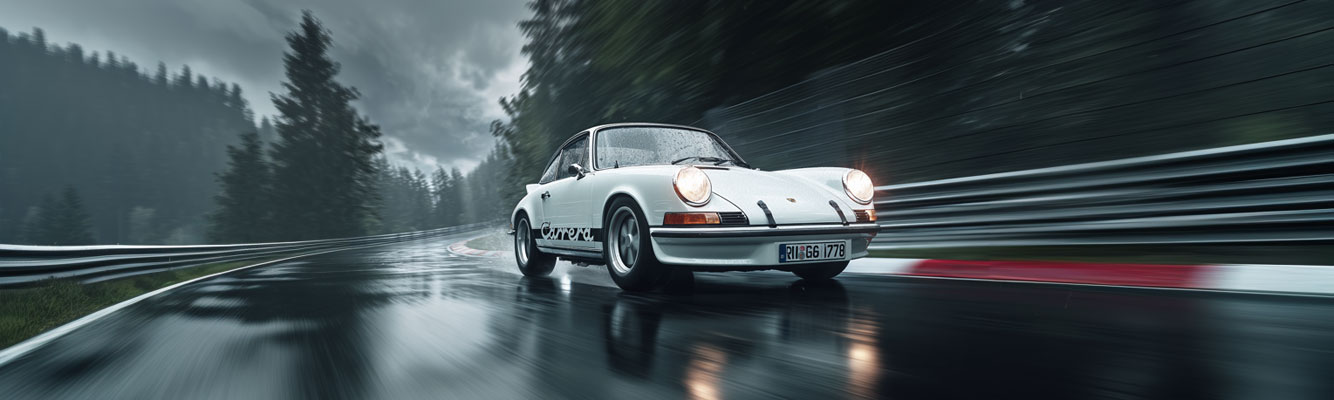
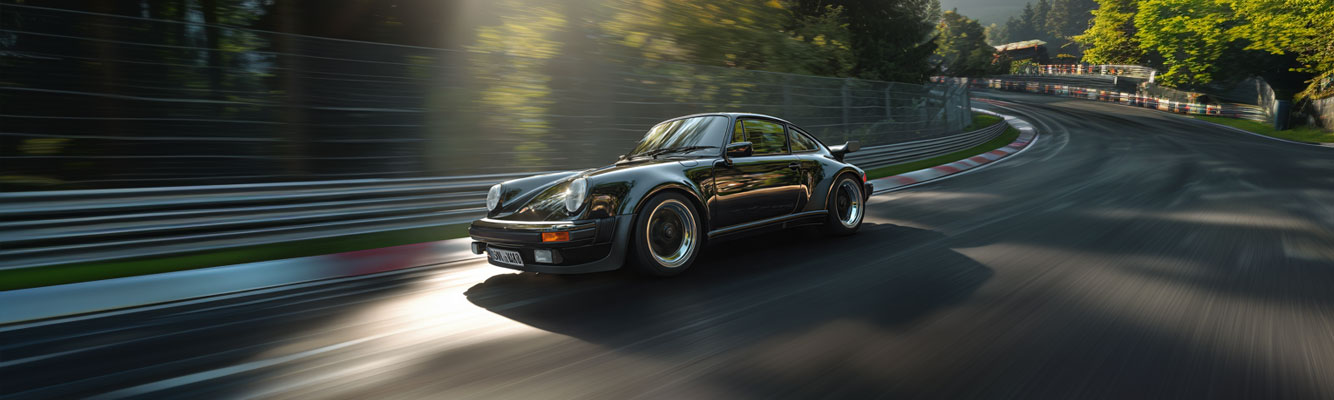
One of the most original and identifiable supercars for hire is the Porsche 911. Since its introduction in the early 1960s, the 911 design has little changed, but the engineering excellence has continued to push boundaries making this one of the most timeless supercars to drive. Despite being over 60 years old, the 911 remains the heart of the Porsche brand and is widely regarded as one of the most authentic and enjoyable supercar experiences.
History of the Porsche 911
The first 911s were being designed and tested in the late 1950s as Porsche began exploring options to replace their highly successful, but aging 356 model. They wanted a car that was ready to tackle the new decade which was faster, bigger and more powerful. Unlike other manufacturers such as Ferrari who would often outsource to design houses such as Pininfarina, Porsche kept development inhouse tasking the responsibility to Ferdinand “Butzi” Porsche, grandson of company founder Ferdinand Porsche. Given that Butzi produced an icon with one of the most recognisable silhouettes in automotive history, it was a wise decision.
The new Porsche 911 was unveiled at the Frankfurt Motor Show in 1963, although was originally labeled as the Porsche 901. The name however upset Peugeot who had the rights to three-digit car names with a zero in the middle having as trademarked the sequence when launching their 201 in 1929.
The very first production 911s featured a rear-mounted, air-cooled flat-six engine. The 911 design was very much based on usability as well as performance and offered an everyday supercar. Drivers quickly praised the rear engine layout, finding it gave the car great balance, even if it was a little erratic with oversteer when pushed to the absolute limit. Rather than a hindrance, this quality gave experienced drivers the fun they wanted in a production supercar.
Through the later 1960s and the 1970s, Porsche continued to develop the 911 and enhance its reputation as a driver’s supercar. They introduced the 911S, which gave the car more power and a more defined handling style as well as the Carrera RS 2.7.
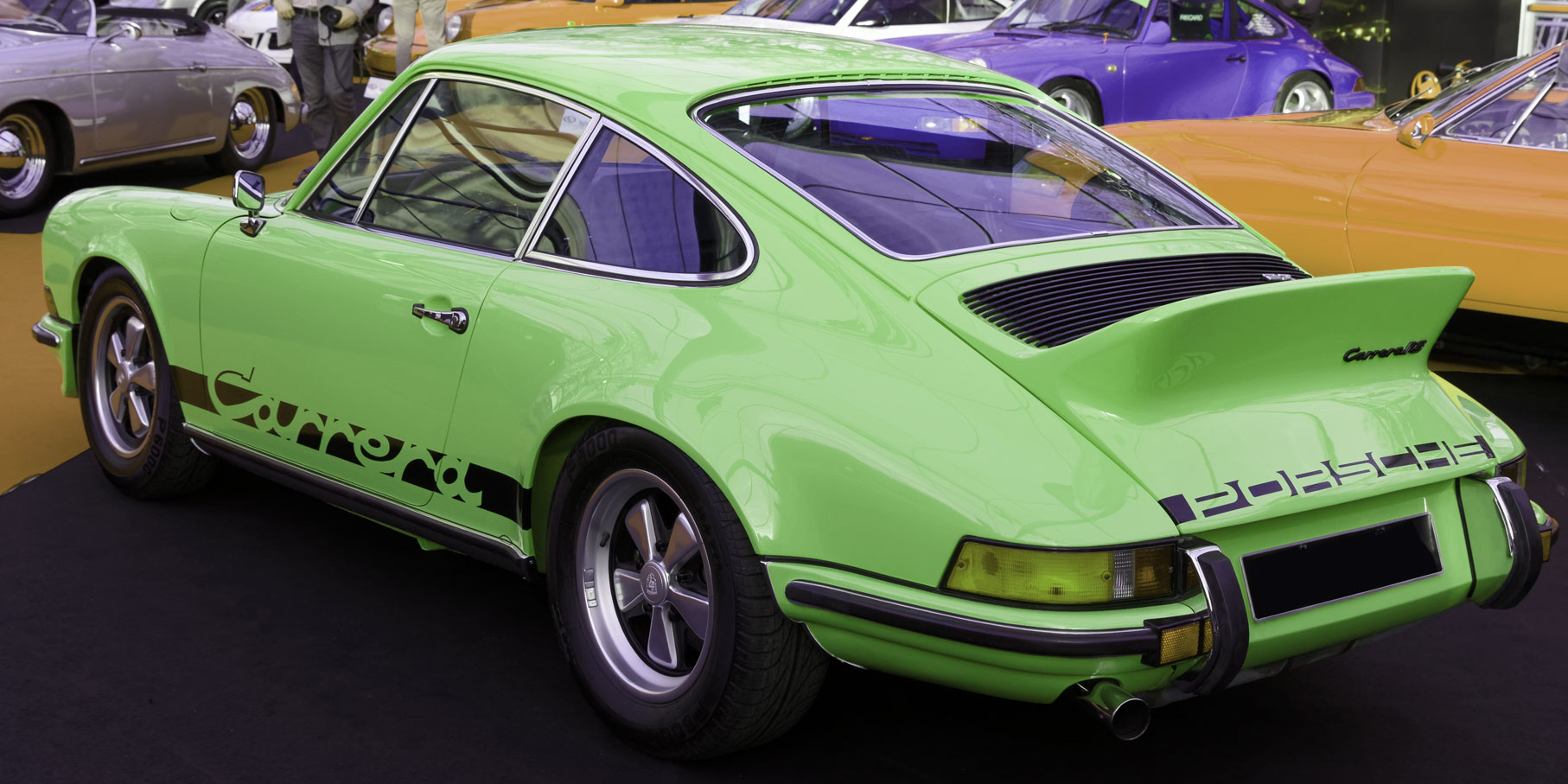
Porsche 911 Carrera RS 2.7 ©Wikipedia
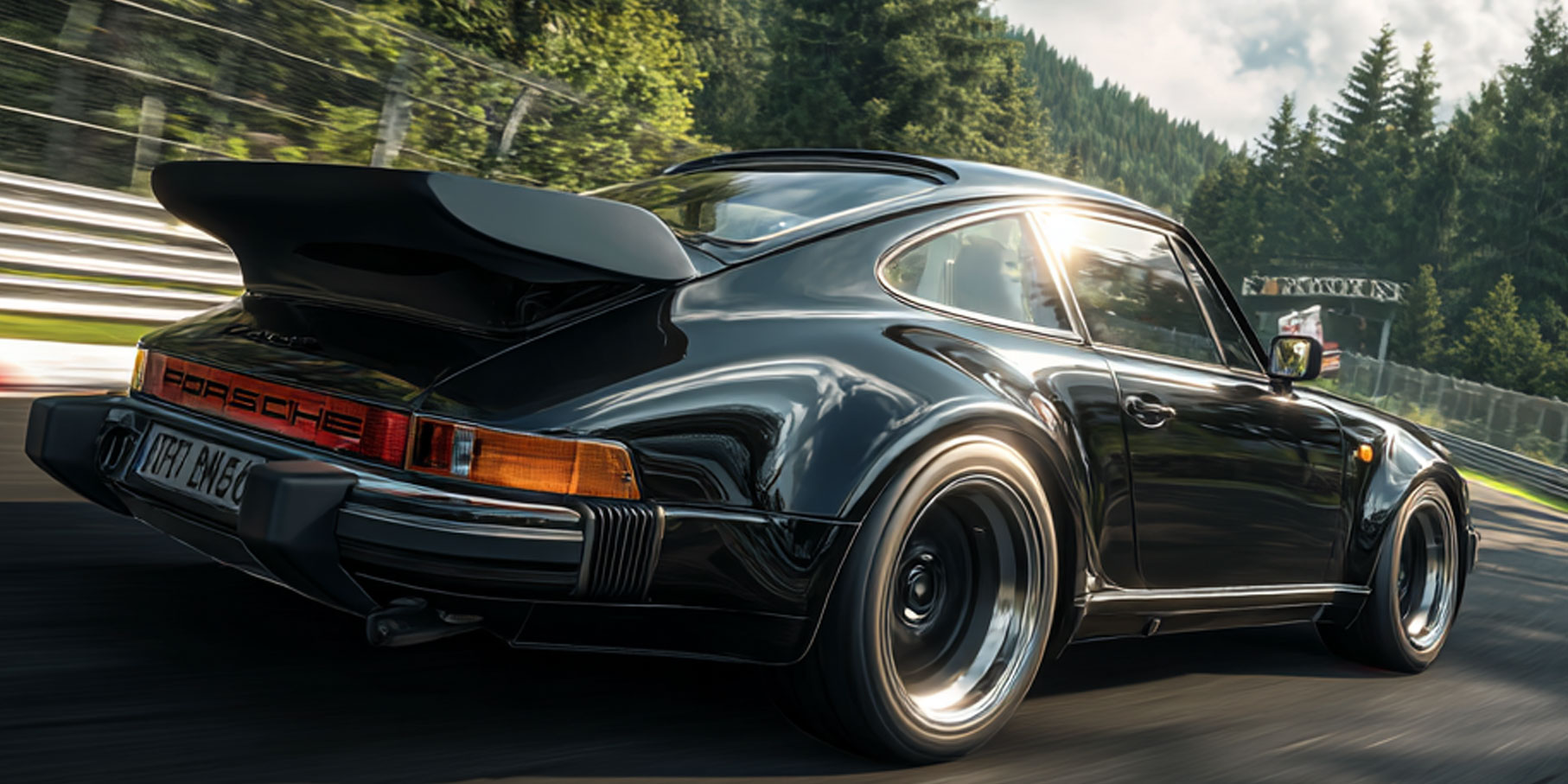
Porsche Turbo 911 930
Porsche Carrara RS 2.7
Launched in 1972, the Carrera RS 2.7 is seen as one of the most legendary versions of the 911. Produced for the track, but also designed to be sold commercially in limited numbers, then Carrera RS 2.7 featured a lightweight body, wider rear arches, and a new 2.7-litre flat-six engine producing 210 horsepower. The car also sported a new ducktail rear spoiler, giving the car a standout design on top of improved high-speed stability. This model is now one of the most sought after 911s for collectors and enthusiasts.
The 911 gave Porsche a new confidence on the track and motorsport success played a major role in the growth of the 911’s reputation. The 911 was used not only for track racing, but also appeared in rallies and endurance events, proving the 911 to be the most versatile supercars available. 911s went on to win at Le Mans, the Monte Carlo Rally and the Daytona 24 hours and raced in the Safari Rally, the RAC Rally and even the East African Rally.
In 1974, the 911 took another huge step toward immortality with the introduction of the 911 Turbo. This was also known as the 930 generation. Initially developed for racing the turbo was quickly adopted primarily by Porsche and then by other supercar manufacturers giving them extra power and performance. To try and harness this significantly increased power, the 911 Turbo featured dramatic flared wheel arches and a large rear spoiler. The 911 Turbo became famous for its explosive acceleration and demanding handling, particularly due to turbo lag. It was often compared to a rocket ship when getting from 0-60. The Turbo became an icon of the 1970s and 1980s and helped define the golden era of supercars.
Porsche continued to develop the 911, but kept the ethos and the shape pretty much the same as the first 911. The 964 generation introduced in 1989 offered all the modern conveniences of power steering, anti-lock brakes and all-wheel drive. Despite all the modern innovation, Porsche kept the traditional air-cooled engine technology giving the 911 a sense of authenticity that supercar fans loved.
The 993 generation which came to market in 1994 is widely considered by supercar aficionados as the finest air-cooled 911 ever produced. This model combined the classic 911 styling with greatly improved handling and build quality. This was to prove to be the last hurrah for the 911 air cooled engines as in 1998, Porsche switched to water cooled engines in the new 996 generation. This move to water cooled engines was met with some resistance, with some fans regarding it as abandoning part of what makes a 911, a 911. However, this was out of Porsche's control as stricter emissions regulations and the need for improved performance made the move necessary.
The 996 generation also introduced a more modern design and focus on improved practicality. They also moved to a system which shared components with other models, including the cheaper Boxster, which also drew criticism, but the 996 models still performed with all the style of a true 911 and this approach basically helped save Porsche as an independent manufacturer in a challenging market.
Subsequent generations refined the new approach and the 911 continued to flourish. Porsche successfully blended 911 tradition with modern technology, ensuring they remained competitive against newer rivals. They remained at the forefront of new innovations in suspension, aerodynamics, and electronics, partly due to their continued involvement in motorsport, which helped improve handling and performance whilst preserving the 911’s distinctive character.
Today, the 911 is offered as an everyday supercar alongside more track based options such as the Turbo and GT3. Porsche has, as have almost all supercar manufacturers, embraced the new greener technology and provides hybrid models. As with all previous developments, Porsche has been careful to retain the 911’s identity and heritage and a move to a battery powered car has proved no different that their switch from air cooled to water cooled engines. The 911 will still be a 911.
The longevity and recognisable shape makes the 911, not only just a supercar icon, but a cultural icon. Unlike many other exotic supercars, the 911 has always been practical enough to drive daily and is often seen on the UK roads. It is accessible, but it is still a thrilling drive. If you would like to spend a weekend with a 911 and see what it is like to drive, then drop us a line and we can make that happen. It is worth it.