A recent Reuters report highlighted the current stresses within the supercar market due to the US and Israeli war with Iran. The escalation of the conflict has created a series of challenges for global supercar manufacturers with them experiencing significant logistical and economic pressures. How have these affected the industry and how will it affect the supercar market in the UK?
What is happening?
The supercar sector is normally seen as relatively resilient due to its wealthy customer base, but the current conflict highlights how even these customers can be influenced by global instability. The war is impacting all the Gulf States and supercar brands like Ferrari, Lamborghini, Bentley and Rolls-Royce rely heavily on Gulf buyers for high margin supercars. These customers, typically from Saudi Arabia and Dubai, are understandably buying fewer cars with the region seeing many showrooms shutting temporarily due to a rough estimated 30% drop in sales in the matter of a few weeks. Forecasts are even suggesting the drop in overall sales of luxury goods could be between 50% and 70% due to the reduced tourism, further impacting the car market.
Impact on Supercar Sales the Middle East
While the supercar sales within the Middle East are a small share of global sales for the supercar brands, it is of unique importance due to the margins paid by the Gulf customers, often significantly above European markets with many cars having bespoke finishes, highly customised additions and accessories which increase the value. This will be of particular concern to the brands, especially in the long term. These bespoke supercar sales are such an important part of the make up of annual income, it will be very difficult for the manufacturers to operate without them. Wealthy clients in the Gulf region are the most active buyers of limited edition vehicles. These supercars will often involve extensive collaboration between manufacturer and client, with long lead times and high margins due to the time it takes and the materials involved. These sales are very important and without them, we could see some brands dramatically impacted in their markets away from the Middle East.
Manufacturers are seeing that their previously profitable cars sold in the $500,000 to $5 million price bracket have ‘nearly halted’ with customers choosing to prioritise their safety and long term futures in the region. While orders for supercars are still being fulfilled, losing these high margin sales, even in the short term, will significantly damage cash flow and future commitments.
Deliveries and logistics have also been impacted, with many shipments not able to make it to the region due to the continued disruption within the Strait of Hormuz. This has resulted in many cars not making it to their customers and therefore not triggering any final payments. Things have eased slightly with manufacturers such as Ferrari and Maserati who initially suspended all sales in the region, now looking to restart deliveries. Other manufacturers have also started to reroute logistics networks but this will inevitably increase both complexity and cost. Not only do these disruptions delay payments but also risk damaging the relationship with high value customers accustomed to seamless service. With everyone within the region experiencing similar difficulties, it is unsure what long term problems car manufacturers will have with their client base.
Supercar brands are choosing to reroute some deliveries to alternative locations, such as China and other Asian countries in order to speed up sales in those areas, which as a short term solution makes sense, but is not sustainable should the war continue.
They are also experiencing rising costs and pressure on margins. The conflict has had a global impact on oil prices which will directly increase the expense of transportation, production, and raw materials. This creates a difficult balancing act for manufacturers as they can now either pass costs on to customers which risks dampening demand or absorbing costs and reduce already pressured margins.
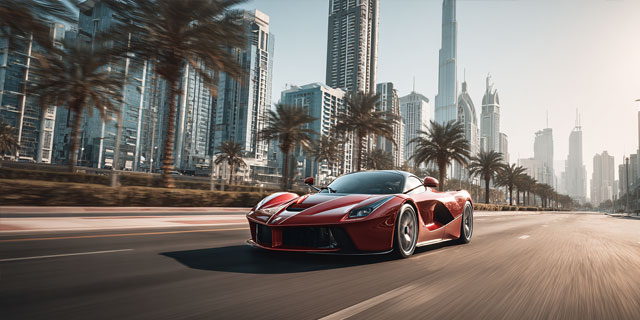
Dubai has long been a playgound for Ferrari
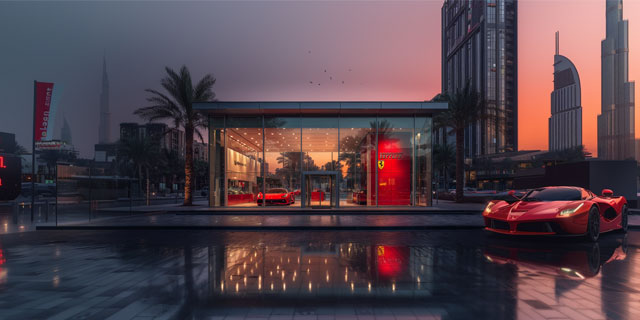
Ferrari showrooms have shut in Dubai